
5 Records Every Genealogist Should Start with
These foundational records prevent costly research mistakes and dead ends.

Welcome to a newsletter themed at the intersection of longevity and wine history. 🍷
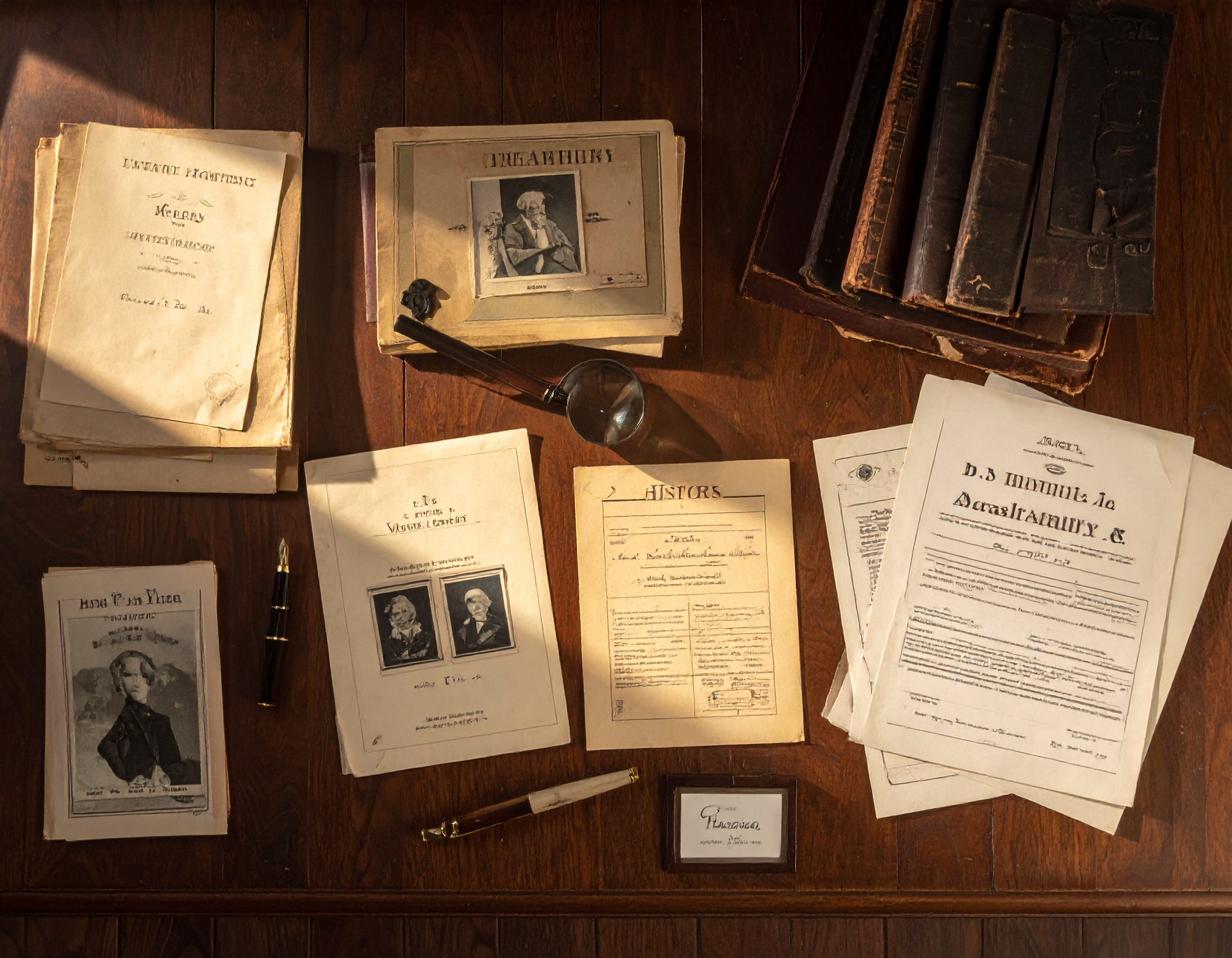
Every family history mystery begins with clues. A forgotten name on a death certificate. A witness listed on a marriage record. A child who appears in one census but disappears in the next.
Individually, these details may seem insignificant. Together, they can unlock generations of your family’s story. Whether you’re researching your first ancestor or your hundredth, these are the five records every genealogist should investigate first, and why each one matters.
1. Birth Record
A birth record is often the most reliable record for identifying a person. It also can connect one generation to the previous generation, serving as the foundation for everything else.
A birth record can provide:
Full name
Date and place of birth
Parents’ names
Mother’s maiden name
Occupations of parents
Residence of the family
2. Marriage Record
Marriage records often reveal information that doesn’t appear anywhere else. It can identify spouses, parents, siblings, cousins, and migration patterns.
A marriage record may include:
Names of bride and groom
Ages
Birthplaces
Occupations
Parents’ names
Witnesses (often relatives)
3. Death Certificate
Death records frequently summarize an entire life. It often provides clues for locating earlier records.
A death certificate may include:
Date and place of death
Cause of death
Birth date and birthplace
Parents’ names
Spouse’s name
Burial location
Informant’s name
Caution: Information is only as accurate as the person reporting it.
4. Census Record
Census records place families together in a specific time and place. They help reconstruct a family over decades and identify children who may not appear in other records.
Census records can reveal:
Household members
Ages
Relationships
Occupations
Immigration information
Property ownership
For American researchers, federal census records from 1850 onward can be particularly valuable. However, it’s not unusual to find errors, like names misspelled or children whose ages don’t match birth records. There are many reasons for this. Unlike birth records or marriage certificates, census records are not gathered directly to benefit the family. Its primary purpose is to apportion seats in the U.S. House of Representatives. Early census data was collected by a census taker, a government employee, who went door-to-door taking an oral report through 1950. Mistakes could be due to mishearing names or the respondent may be one who didn’t know exact ages of the children, among other reasons.1
5. Obituary
Obituaries often contain the family story. It can instantly identify multiple generations of relatives and provide leads for further research.
A good obituary may include:
Parents
Spouse
Children
Grandchildren
Siblings
Military service
Occupation
Religious affiliation
Clubs and organizations
Why These Five Records Come First
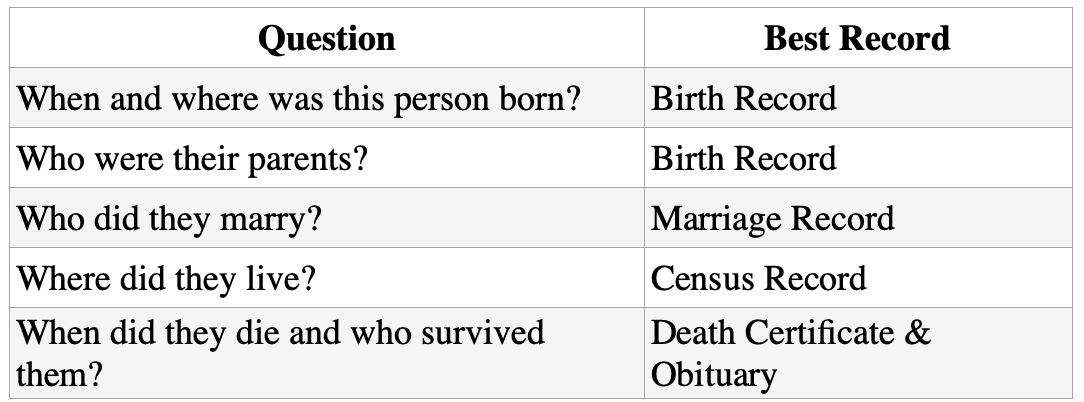
Together, these records answer the five questions every genealogist needs to establish:
How to Organize Your Family Research Efficiently

Learn a simple 5-step system to organize family history research, photos, and records so you can find documents faster and avoid duplicate work.
If you’re new here—hi, I’m Kevin!
I’m the author of 🍷 Rain on the Monte Bello Ridge,🍷 my forthcoming memoir about health, aging and winemaking. (Read the origin story of the book.) 🍇
The Centenarian Playbook is my newsletter, which features:
🧑⚕️ Healthy aging/longevity tips
🍷 Wine history & stories of the Gemello Winery
📚 Ancestry & family research tips
How the Census taking process has changed in brief: In 1960, the U.S. launched a hybrid approach, mailing questionnaires, but enumerators visited homes to collect them. In 2020, most households could respond online for the first time, while paper forms and phone responses remained available.