
The Power of Restoring Old Family Photos
Why some imperfections matter more than perfect resolution.

Welcome to a newsletter themed at the intersection of longevity and wine history. 🍷
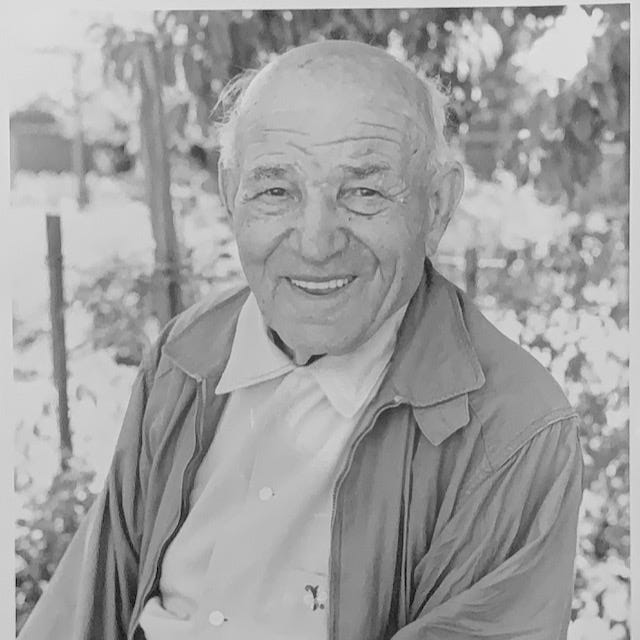
c. 1978: John Gemello, founder of Gemello Winery
In 1912, my great-grandfather immigrated to California, bringing his Italian winemaking skills to the Santa Clara Valley. When Prohibition hit eight years later, Great Grandpa John Gemello pivoted from winemaking to berry-peddling. He and his partners invested in a fleet of trucks, operating a sort of traveling farmers’ market, delivery vegetables house to house throughout the county.
For the past six months, I’ve been using AI to restore old or low-resolution family photos, such as this orginal 1920s-era photo below. It features Great Grandpa John Gemello and two of his children, Mario (my grandfather) and my great aunt, Sally.
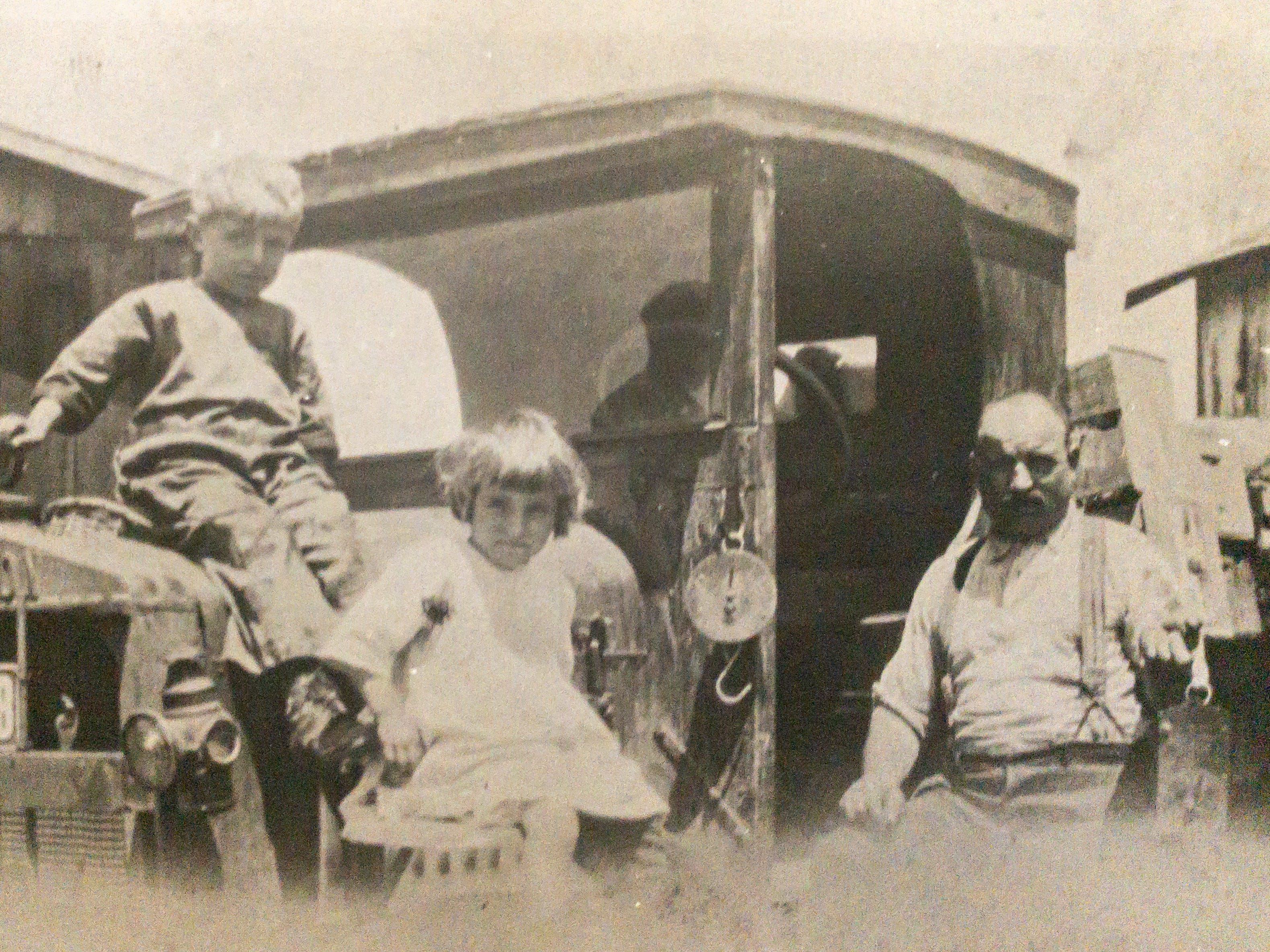
AI allows you to fix cracks and remove noise while trying to preserve the identity of the people and the environment of images. While AI has its skeptics, I view the technology as a way to improve an image by making it more visible and clear.
I previously resisted colorizing this photo. After spending 20-30 minutes with several prompting tweaks (keeping it in B&W), I struggled to remove as much noise as I wanted. I finally said, “What if?” I decided to try to colorize it using Topaz Labs (a partner tool inside Adobe Firefly Boards). It did, in fact, remove much of the noise.
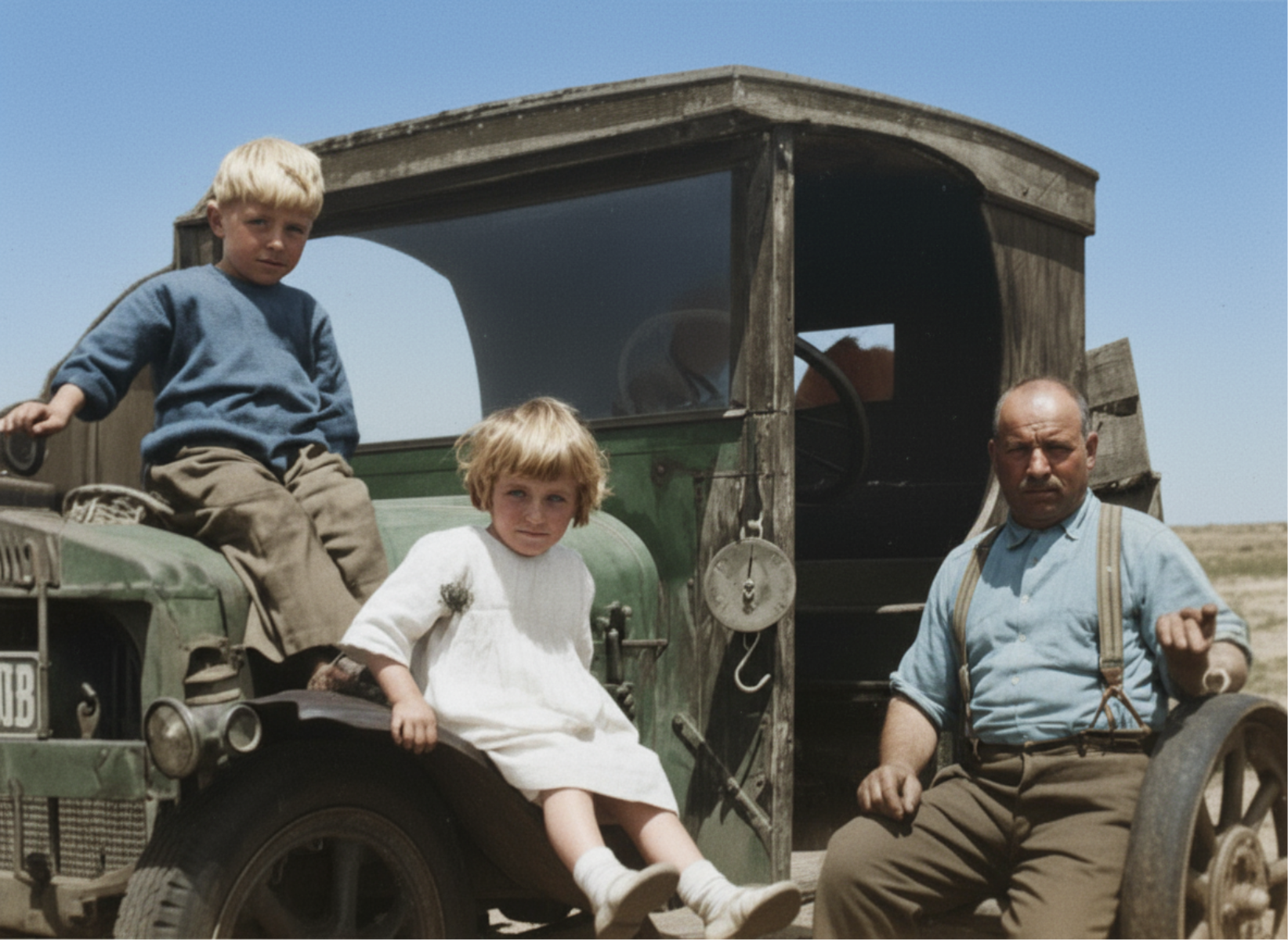
Adding subtle color not only cleaned up the image but brought a new vibrancy to their faces, clothing textures, and even the vegetable truck itself.
Sometimes, stepping outside tradition (whether in history or creative tools) reveals a new layer of storytelling. A faded memory can come alive again - with just a spark of curiosity.
Restoring Photos Gone Awry
Grandpa Mario, the little boy in the 1920s photo, was married to my grandmother for 64 years before passing away in 2005. He was 89. This has left Grandma Kay a widow for the past 20 years. She turned 104 last summer.
Every December for the past decade, I’ve been making her a family calendar for Christmas. I incorporate family photos from the past year, but also reach into my archives for digitized old photos of Grandpa Mario.
The exercise of using AI to enhance a Prohibition-era family photo inspired me to upscale a favorite photo of my grandparents dancing at an Italian-style dinner party from the 1990s.
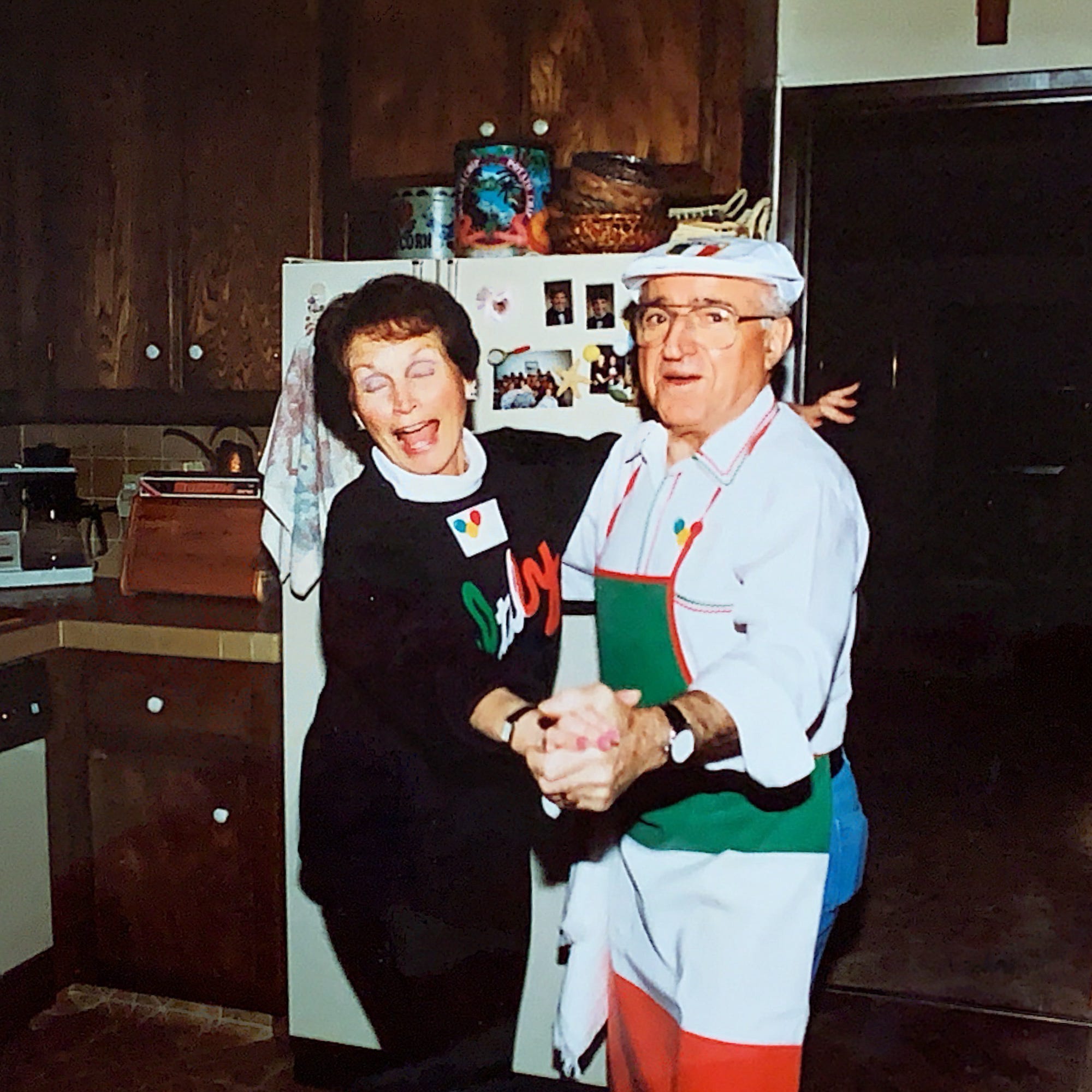
In the photo, Grandma Kay is laughing as she’s held in a partner dance hold with Grandpa Mario. The only problem: her eyes were closed. So I got a little greedy, and prompted AI to make a small tweak: open her eyes. It worked (sort of).
On my phone and my laptop, the new image looked okay. However, in its final version, on an 8-x-11-inch calendar photo, her face had a different shape. When Grandma Kay unwrapped her calendar, turned to the April month, and saw it, she blurted out: “Whose Grandpa dancing with?”
Many family members who were seeing the photo from a distance said, “that’s you!”
“That doesn’t look like me,” she said.
The shape of her face was off, as was her nose, eyes and mouth.
Yikes! What have I done?
It turns out Topaz is good for clarity, but not so good for “identity locking,” or holding true to a person’s likeness. When I asked the tool to open her eyes, it had to “invent” her eyes, without other photos of her to reference. This recreation is perhaps good for stock photos, but not good for family history, and not something I would encourage after doing this research.
Grandma Kay hangs her calendar in her living room, where she spends most of her time when not tinkering in her garden or eating her meals in her dining area.
Imagining her staring at a Grandma Kay look alike that’s a little off for 30 days come April, troubles me. I might have to make a new one and sneak it up on the wall, while she’s distracted. For decades, we’ve tried to convince her to get a computer. Since she has not relented, she doesn’t read my newsletter.
I trust that you won’t tell her. It’ll be our little secret.
How AI Image Tools Work
If you want to know more about AI image tools and how they work, Denyse Allen often writes about them from a family historian’s perspective. In this photo restoration post, she goes deeper into the topic, including how Google’s new AI image technology takes a different approach than other tools.
If you’re new here—hi, I’m Kevin!
I’m the author of 🍷 Rain on the Monte Bello Ridge,🍷 my forthcoming memoir about health, aging and winemaking. (Read the origin story of the book.) 🍇
The Centenarian Playbook is my newsletter, which features:
Healthy aging/longevity tips and stories from Grandma Kay’s long life.
Wine history & stories of the Gemello Winery
Ancestry & family research tips
There are three buttons at the bottom of every post: “like,” “comment,” and “restack.” Restacking is sharing in digital form. It goes out to the Substack community. If you enjoy the content and click “Restack,” it helps a lot.